Every fare priced twice. Every catch caught first.
Our AI checks your route across dozens of fare sources, then catches the two things that quietly break a cheap ticket: a visa you didn’t know you needed, and a bag fee that eats the savings. One flat fee, one full report — see a sample before you pay.

No black box. Here’s exactly what happens.
Between your search and your “buy” button, four steps — every price read twice, every catch surfaced, every option stamped.

- 1
Price it twice
We check your route against dozens of fare-comparison engines and airline systems — the same multi-tab research you'd otherwise do yourself across sites like Google Flights, Kayak and Skyscanner. Two independent reads on the price, not one.
- 2
Cross-check and stamp
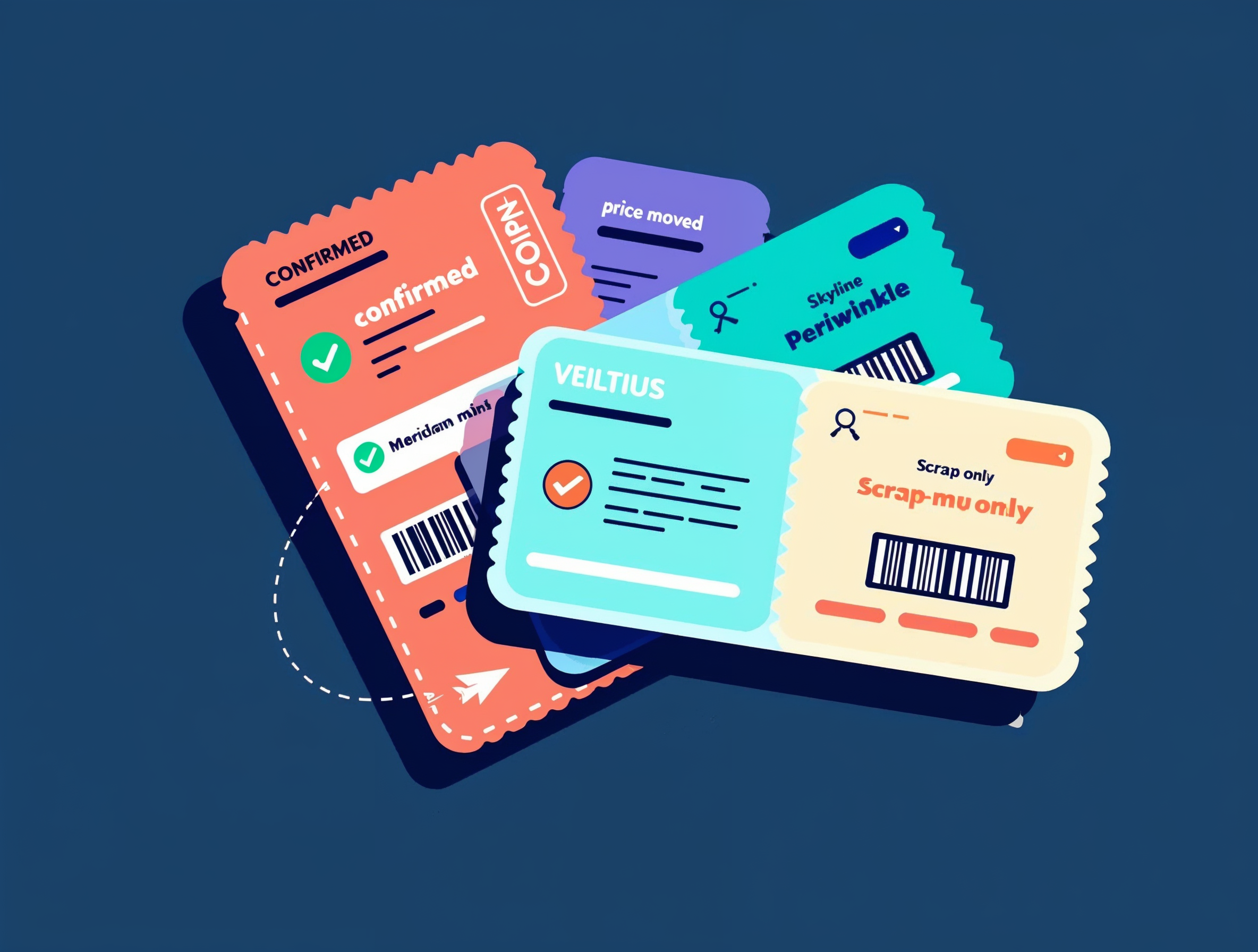
We match the itineraries and compare the numbers. Each option gets a verdict — ✅ confirmed, ⚠️ price-moved, or 🔎 scrape-only — so you can tell which prices actually agree.
✅ Confirmed⚠️ Price moved🔎 Scrape-only - 3
Check the fine print
Visa and transit rules for the passport you're travelling on. Checked-bag and carry-on limits in kg, per leg. The details that turn a cheap flight into an expensive mistake — checked for each traveler.
- 4
Verdict, then a real link
You get the confidence stamp, the full price with one bag and with two, and a purchase deeplink that lands on a fare you can actually book — not a dead end.
More than a cheapest-price race
Cross-checked prices
Two sources price every option and we show you when they agree. A stamp means the fare shifted since we pulled it — you find out here, not at checkout.
Purchase deeplinks that work
The buy button goes somewhere. Every option carries a live Select/Book link from the meta-search that found it, so you book the fare you were quoted.
Visa and transit checks
We check every connection hub against the passport you hold — ESTA, eTA, Schengen, transit visas. A layover that needs paperwork you can’t get is flagged, not ranked as your cheapest option.
Baggage in kg, not guesswork
Checked and carry-on allowances in , per leg, with the second-bag cost spelled out. ULCC traps — where the cabin bag is paid — get called out before they surprise you.
You buy, we never touch your card
One flat fee gets you the research. The flight itself is bought directly from the airline or travel site, on your card — we don’t process that payment or book anything. Skip the days of manual digging; get the answer in one report.
A dozen open tabs, or one search
Planning a trip by hand means the same research across site after site — and it’s easy to miss the best routing. Here’s the same job, done two ways.
Doing it yourself
- Open Google Flights, then Kayak, then Skyscanner — then the airline's own site to check the bag fee.
- Compare every price by hand, tab by tab, and hope you didn't miss a smarter routing.
- Track down whether your passport needs a transit visa at each connection.
- Add up the baggage fees yourself and find out the cheap fare wasn't so cheap.
One search, checked twice
- One search. We do the tab-switching — however unusual the ask: multi-stop, visa-constrained, or comfort first.
- Every option cross-checked and stamped with a confidence verdict, matched to what you actually asked for.
- Visa and transit rules checked for the passport you hold, at every hub.
- One report with real, clickable purchase links — priced with one bag and with two.
Search to report in one pass
From a single search to a report full of real, bookable links — no dozen open tabs, no manual math, no visa surprise at the gate. The research you’d do yourself, done for you, so the hard part is just deciding where to go.
A peek at a real report
This is exactly what your flat fee buys: one card per itinerary, priced with one bag and two, each stamped with its cross-check verdict and visa notes. No mystery, no “trust us.”
Da Nang (DAD) → Vancouver (YVR) · sample
| Option | Route | Stops | 1 bag | 2 bags | Approx. | Cross-check | Visa & transit |
|---|---|---|---|---|---|---|---|
| A | DAD → TPE → YVR | 1 | $842 | $922 | ≈ 16h 15m | ✅ Confirmed | None — eTA auto (ESP) |
| B | DAD → MNL → YVR | 1 | $631 | $765 | ≈ 22h 25m | ⚠️ Price moved | None — eTA auto (ESP) |
Comfort / Non-stop
Best price for the least hassle · DAD → TPE → YVR · 1 stop
| Leg | Airline / flight | Departure | Arrival | Flight | Visa & transit | |||||
|---|---|---|---|---|---|---|---|---|---|---|
| DAD → TPE | EVA Air BR 392 | 20-Oct 14:10 | 20-Oct 18:40 | 3h 30m | TPE 2h 20m | 1 × 23 kg | 7 kg / 1 pc | $80 | None (ESP transit) | — |
| TPE → YVR | EVA Air BR 10 | 20-Oct 21:00 | 20-Oct 16:25 | 10h 25m | — | 1 × 23 kg | 10 kg / 1 pc | incl | eTA — auto for ESP | — |
- Total — 1 bag / 2 bags
- $842 / $922
- total transit 16h 15m
Cross-check: ✅ Confirmed · pulled 2026-10-20 09:14 ICT. Fares move — re-verify before you buy.
A real report layout. Every price cross-checked, every catch surfaced, every buy link live at the moment it was pulled.
Start a search just by talking
Not up for a form? You can start your search by voice instead. Tell the assistant where you’re headed and answer the questions it asks — the same details a form would collect. You get the same double-checked report at the end.
It’s a conversational way to start — same checks behind it. Every fare is still priced twice and every catch still gets surfaced.
- Where are you flying, and from where?
- When — and how flexible are your dates?
- How many travelers, and how many checked bags?
- Which passport are you travelling on?
You answer out loud — Pax fills in the rest and runs the same search.